
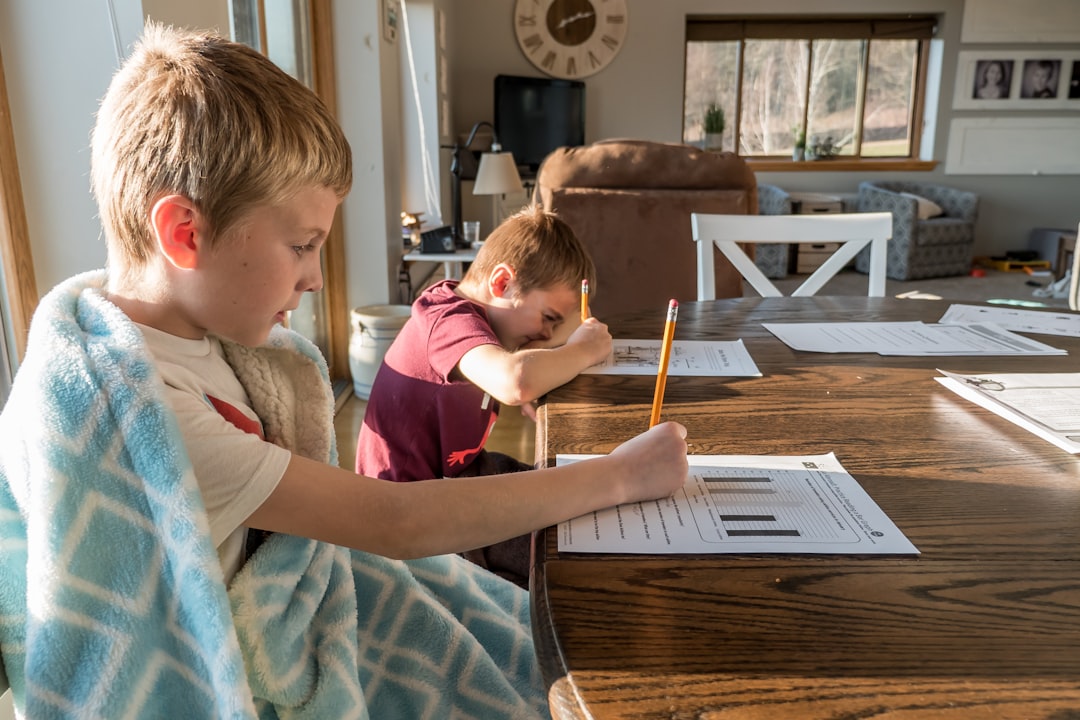
Header photo by Jessica Lewis 🦋 thepaintedsquare on Unsplash
Creating a science-focused home-schooling curriculum is one of the most rewarding things you can do for your child’s education. It’s also, if we’re being honest, one of the most daunting. Where do you start? What topics do you need to cover? How do you make sure you’re actually meeting Australia’s legal requirements for home education while still keeping things fun and engaging?
The good news is that it’s absolutely achievable. Thousands of Australian families are doing it well right now, and with the right framework, you can too. This guide walks you through every step of building a science curriculum that’s legally compliant, educationally rigorous, and genuinely exciting for your child. We’ve included links to official Australian government resources throughout so you can verify everything directly and stay confidently on the right side of the law.
Understanding Australia’s Legal Requirements for Home Schooling
Before you pick up a single textbook or plan a single experiment, it’s essential to understand the legal landscape. Home schooling in Australia is regulated at the state and territory level, which means the rules vary depending on where you live. All states require registration, and most require you to demonstrate that your curriculum is aligned with the Australian Curriculum, which is the national framework developed by the Australian Curriculum, Assessment and Reporting Authority (ACARA).
Here’s a quick overview of the registration and compliance requirements in the four states most relevant to this guide:
Queensland
In Queensland, home schooling is regulated by the Queensland Department of Education. Parents must apply for registration, submit a learning program, and have their program approved. The program must be based on the Australian Curriculum and must cover all eight learning areas, including Science. You’ll also need to maintain records and be prepared for periodic reviews.
New South Wales
In NSW, home schooling is overseen by the NSW Education Standards Authority (NESA). You must register with NESA and submit a curriculum plan that demonstrates alignment with the NSW Curriculum, which is based on the national framework. NSW requires an annual review and expects evidence of educational progress across all key learning areas, including Science and Technology.
South Australia
South Australian parents register through the South Australian Department for Education. Registration is required under the Education and Children’s Services Act 2019. Families must demonstrate that their educational program is equivalent in standard to schooling provided in a government school, covering the same breadth of learning areas including Science.
Victoria
In Victoria, home schooling registration is managed through the Victorian Registration and Qualifications Authority (VRQA). Parents must register and provide a curriculum plan based on the Victorian Curriculum F-10, which incorporates the national Science curriculum. Annual reviews assess whether the child is receiving a program that meets the required standard.
The key takeaway here is that regardless of your state, your Science curriculum needs to align with the relevant curriculum framework. The Australian Curriculum’s Science strand is an excellent starting point because it underpins most state and territory frameworks.
Step 1: Familiarise Yourself with the Australian Curriculum Science Strand
The Australian Curriculum: Science is organised into three interconnected strands:
- Science Understanding – the content knowledge across biological sciences, chemical sciences, earth and space sciences, and physical sciences.
- Science as a Human Endeavour – the nature of science, its history, and how science contributes to society.
- Science Inquiry Skills – the practical skills of questioning, planning, investigating, processing, evaluating, and communicating.
All three strands are meant to be taught together, not in isolation. A great Science lesson doesn’t just deliver facts; it also shows your child how scientists think, question, and explore the world. This integrated approach is both a curriculum requirement and genuinely the most effective way to teach science.
When you’re building your curriculum, check the achievement standards for your child’s year level. These describe what a student is expected to understand and be able to do by the end of each year band. They’re your compliance benchmark, and they’re also a really helpful planning tool.
Step 2: Set Clear, Measurable Educational Goals
Once you’ve reviewed the curriculum framework, it’s time to set goals. These aren’t just ticking boxes for registration purposes; they’re the foundation of everything you’ll plan and teach. Good goals should be specific, realistic, and meaningful to your child.
Here’s a simple process to follow:
- Download the achievement standards for your child’s year level from the Australian Curriculum website.
- Review the content descriptions for each sub-strand and highlight the ones that align with your child’s interests and your broader educational values.
- Draft a list of 6 to 10 learning goals for the year. For example: “By the end of Year 5, [child’s name] will be able to describe how living things depend on each other and on their environment.”
- Sit down with your child and share these goals in language they can understand. Invite their input. You might be surprised how much more engaged they are when they’ve had a say in what they’re learning.
- Write these goals into your registration documentation where required, using the language from the curriculum framework to demonstrate clear alignment.
Connecting goals to your child’s real interests makes an enormous difference. If they’re obsessed with animals, link your goals to biological sciences and ecology. If they love building things, lean into physical sciences and engineering principles. The curriculum is broad enough to accommodate almost any genuine interest.
Step 3: Map Out Your Topics and Scope and Sequence
A scope and sequence document is essentially your curriculum map. It shows what you’ll teach, when you’ll teach it, and how topics connect to one another. Most state authorities want to see evidence that your program is structured and progressive, so having a clear scope and sequence is valuable both for compliance and for your own planning.
To build your Science scope and sequence:
- List the four science sub-strands: biological sciences, chemical sciences, earth and space sciences, and physical sciences.
- For each sub-strand, identify the content descriptions relevant to your child’s year level from the Australian Curriculum.
- Arrange these into units across your school year. A typical home-school year might run 38 to 40 weeks, so you could plan four to six units of roughly six to eight weeks each.
- Within each unit, plan for all three strands: science understanding, science as a human endeavour, and science inquiry skills. A single investigation can cover all three at once.
- Build in review weeks and flexible weeks to accommodate excursions, real-world projects, or topics that unexpectedly capture your child’s imagination.
Don’t try to cover everything in equal depth. The Australian Curriculum is designed for a full classroom year, and home schooling gives you the gift of depth. Spending more time on topics that genuinely excite your child is not only acceptable; it’s often more educationally valuable than a surface-level survey of everything.
Step 4: Choose High-Quality, Credible Resources
Resource selection is one of the most important decisions you’ll make. Good resources should be accurate, engaging, age-appropriate, and aligned with the curriculum. Here are some excellent starting points:
Official Curriculum Resources
- The Australian Curriculum website includes teaching advice, elaborations, and worked examples for every content description.
- The Scootle platform, maintained by Education Services Australia, provides thousands of curriculum-aligned digital learning resources specifically for Australian educators and home-schooling families.
Science-Specific Resources
- The CSIRO Education portal offers curriculum-aligned activities, STEM challenges, and resources across all year levels. CSIRO is Australia’s national science agency, so the content is authoritative and locally relevant.
- The ABC Education platform (formerly ABC Splash) has a rich library of videos, interactives, and articles sorted by year level and subject area.
- State-run science museums such as Questacon in Canberra, the Queensland Museum, the Australian Museum in NSW, the South Australian Museum, and Scienceworks in Victoria all offer educational resources, school holiday programs, and in some cases dedicated home-schooling days.
Books and Print Materials
Don’t underestimate the value of a well-chosen science textbook. Publishers like Oxford University Press and Jacaranda produce Australian Curriculum-aligned science textbooks by year level. These can provide a useful backbone for your curriculum, especially when you’re first starting out and want a reliable structure to build from.
Step 5: Design Hands-On Learning Experiences
Science comes alive through doing. The inquiry skills strand of the Australian Curriculum specifically requires that students develop practical investigation skills, so hands-on learning isn’t just enjoyable; it’s a curriculum requirement.
Here are some practical ideas across different science areas:
Biological Sciences
- Set up a worm farm or compost bin and observe decomposition over several weeks.
- Grow fast-germinating seeds like bean sprouts under different conditions (varying light, water, or soil type) to investigate the needs of living things.
- Survey your backyard or local park and create a simple field guide to the plants and animals you find.
Chemical Sciences
- Conduct the classic baking soda and vinegar reaction and extend it by varying the quantities and recording observations. Ask your child: “What do you predict will happen if we double the vinegar?” This is inquiry-based thinking in action.
- Use red cabbage juice as a natural pH indicator to test household liquids. It’s safe, colourful, and genuinely fascinating.
- Make slime using PVA glue and borax solution (with appropriate supervision) and discuss the properties of polymers.
Earth and Space Sciences
- Keep a weather journal for a month, recording temperature, rainfall, and cloud cover. Use data from the Bureau of Meteorology to compare your observations with official records.
- Build a model of the solar system using everyday objects to explore scale and distance.
- Investigate local landforms and discuss how they were shaped by geological processes over time.
Physical Sciences
- Build simple circuits using a battery, wire, and a small globe to explore electrical conductivity.
- Design and test paper bridges to explore concepts of force, load, and structural design.
- Use a torch and various household objects to investigate how light behaves when it hits different surfaces.
When planning hands-on activities, always consider safety first. The CSIRO has helpful guidance on safe science practices for home settings, and it’s worth familiarising yourself with basic laboratory safety principles even for simple kitchen experiments.
Step 6: Incorporate Field Experiences and Community Science
Getting out into the world is one of the greatest advantages of home schooling. You’re not confined to a classroom, and that means science can happen anywhere: in a national park, at the beach, in a museum, at a community garden, or on a farm.
Before every excursion, prepare your child by discussing what they might observe and what questions they could investigate. After the visit, take time to reflect. Could they draw a diagram? Write up their observations? Present their findings to another family member? These follow-up activities cement the learning and also generate portfolio evidence for your compliance records.
Some ideas worth exploring:
- Citizen science programs through Australian Citizen Science Association allow your child to contribute real data to genuine scientific projects, from bird counts to water quality monitoring.
- National parks and conservation areas often run guided educational programs. Contact your local national parks authority to find out what’s available.
- Many university science departments and TAFE campuses run open days or community education events that home-schooling families can attend.
Step 7: Use Digital Tools and Online Learning Thoughtfully
Online learning is a genuine asset for home-schooling science, but it works best when it’s intentional rather than just screen time for its own sake. A balanced approach might allocate specific sessions for digital learning, with a clear purpose and follow-up discussion or activity.
Some reliable and curriculum-relevant digital tools include:
- Khan Academy: Offers structured science lessons with exercises aligned to year levels. Particularly strong for physical and chemical sciences.
- NASA’s Education Portal: Provides free resources on space science, earth science, and engineering that are visually stunning and conceptually rich.
- PhET Interactive Simulations from the University of Colorado: These free science simulations allow students to virtually explore everything from atomic structure to wave behaviour. They’re especially valuable for topics that are hard to replicate at home.
When your child watches a documentary or works through an online module, build in a conversation about what they noticed, what surprised them, and what questions they still have. This turns passive consumption into active learning, and it’s a great way to develop the kind of scientific thinking the curriculum is looking for.
Step 8: Record Keeping and Assessment for Compliance
Record keeping is non-negotiable in Australian home schooling. Every state authority requires evidence that your child is receiving a quality education, and in the event of a review, you’ll need to demonstrate progress. Good records also help you as a teacher; they show you what’s working and where your child might need more support.
Here’s a practical record-keeping system for science:
- Learning journal or portfolio: Keep a folder (physical or digital) for each term. Include samples of work, photos of experiments, drawings, written reports, and any projects your child has completed.
- Experiment log: Encourage your child to write up investigations using a simple format: question, prediction, method, results, conclusion. This directly addresses the science inquiry skills strand and doubles as excellent portfolio evidence.
- Curriculum tracking spreadsheet: Create a simple spreadsheet listing each content description from the Australian Curriculum for your child’s year level. Mark each one as introduced, in progress, or completed. This gives you a clear compliance snapshot at any time.
- Anecdotal notes: Keep brief notes after sessions about what your child understood well, what was challenging, and any particularly interesting questions they asked. These notes help you plan next steps and can be invaluable during a registration review.
- Assessment tasks: Rather than formal tests, consider projects, presentations, models, video reports, or illustrated booklets as your assessment tools. These formats tend to be more engaging for home-schooled children and often reveal a deeper level of understanding than a written test would.
Each state authority has specific guidance on what evidence to keep. Check the relevant guidelines for your state and make sure your record-keeping system meets those requirements from day one. It’s much easier to build good habits at the start than to reconstruct records later.
Step 9: Support Your Child’s Scientific Identity and Curiosity
Compliance is important, but it’s not the whole picture. The deeper goal of a science education is to help your child develop a genuine sense of curiosity and confidence as a thinker and investigator. This is what the “Science as a Human Endeavour” strand is really about; it’s about showing your child that science isn’t just a collection of facts, it’s a way of engaging with the world.
Here are some ways to nurture your child’s scientific identity:
- Talk about real scientists, including Australian scientists. Explore the contributions of figures like Nobel laureate Barry Marshall (who discovered the bacterial cause of stomach ulcers) or astrophysicist Brian Schmidt, or Indigenous knowledge holders whose environmental understanding has shaped modern ecology.
- Introduce your child to science careers beyond the stereotypical “lab coat” image. Environmental scientists, science communicators, agricultural researchers, marine biologists, and science journalists are all valid and exciting pathways.
- Celebrate scientific mistakes and dead ends as part of the process. Some of the most important discoveries in history came from unexpected results. Teaching your child that “wrong” answers are valuable is one of the most scientifically accurate things you can do.
- Let your child’s questions drive units of inquiry. If they want to know why the sky is blue or what makes something magnetic, that question can anchor a whole unit of work. Following genuine curiosity is what produces lasting learning.
Step 10: Connect with the Home-Schooling Community
Home schooling doesn’t have to mean isolated learning. There’s a thriving and generous home-schooling community across Australia, both online and in person, and connecting with it can make a real difference to both you and your child.
State-based home-schooling associations are a great starting point. They often run science days, co-ops, and group excursions. Some examples include:
- Home Education Queensland (HEQ)
- Home Education Association (HEA), which operates nationally
- Home Education Network (HEN) in Victoria
- Home Education SA
Local libraries are often underused gems. Many public library systems across Australia run STEM programs, host science clubs, and offer equipment loans including telescopes, microscopes, and programmable robotics kits. Pop in and ask what your library has available for home educators; you might be pleasantly surprised.
Online communities can also be a wonderful source of support, ideas, and resources. Facebook groups and forums dedicated to Australian home schooling often include science-focused threads where parents share experiment ideas, resource reviews, and curriculum plans.
Step 11: Review, Reflect, and Adjust Your Curriculum Regularly
A good curriculum is a living document, not a finished product. Your child will change, their interests will shift, and your own confidence as an educator will grow. Build in regular review points; once a term at minimum, to assess what’s working and what isn’t.
Ask yourself:
- Is my child making progress toward their learning goals?
- Are they genuinely engaged, or are we just going through the motions?
- Are there gaps in the curriculum I need to address before our next registration review?
- Are there topics we could go deeper on because they’ve sparked genuine curiosity?
Review your curriculum documentation at the same time. Make sure your scope and sequence still reflects what you’re actually teaching, and update your records to show how your program has evolved. Registration authorities generally respond well to evidence of thoughtful, responsive curriculum planning.
A Note on Using Pre-Made Science Curricula
Some home-schooling families choose to purchase a pre-made science curriculum from an Australian or international provider. This can be a helpful starting point, particularly in your first year. However, it’s important to check that any commercial curriculum you use is genuinely aligned with the Australian Curriculum standards for your child’s year level. Overseas curricula, particularly those from the US or UK, may cover similar topics but won’t necessarily meet the specific content descriptions, inquiry skills, or achievement standards required for Australian registration purposes.
If you use a commercial curriculum, map it against the Australian Curriculum yourself and document where the content aligns and where you may need to supplement. This mapping document can be included in your registration materials to demonstrate compliance.
Keeping Your Science Curriculum Fresh Year After Year
One of the most common challenges for experienced home-schooling parents is maintaining momentum and freshness as the years go on. Here are a few strategies that work well for science in particular:
- Rotate your “deep dive” topic each year. Go deep into astronomy one year, marine biology the next, then chemistry. This gives each year a distinct character while still covering the required content across the curriculum.
- Take advantage of current events. When there’s a solar eclipse, a major wildlife story, a space mission, or a local environmental issue in the news, use it. Real-world science hooks are more powerful than almost anything you can plan in advance.
- Invite guest speakers. A local vet, a university researcher, a farmer, a water quality scientist from your local council; these conversations bring science to life in ways no textbook can replicate. Many professionals are genuinely happy to spend an hour with a curious young learner.
- Let your older child take increasing ownership of their own learning. Home-schooled students who are approaching secondary years can begin to contribute to their own curriculum planning, research topics independently, and design their own investigations. This is excellent preparation for senior schooling and beyond.
Your Science Curriculum is a Gift Worth Getting Right
Building a compliant, curiosity-inspiring science curriculum for your home-school student is genuinely one of the most valuable things you can do for their long-term development. Science education isn’t just about preparing children for STEM careers; it’s about teaching them how to think critically, ask good questions, test ideas against evidence, and stay curious about the world around them. These are life skills, and you’re in a unique position to nurture them.
Take it one step at a time. Start with the curriculum framework, set meaningful goals, build in hands-on experiences, keep good records, and stay connected with your state’s registration requirements. And don’t forget to enjoy the process. Some of the best science learning happens in the middle of an experiment gone unexpectedly wrong, or during a conversation sparked by a question you didn’t see coming.
You’ve got this. And your child is lucky to have a parent who cares this much about getting it right.
Key Resources at a Glance
- Australian Curriculum: Science (ACARA)
- Queensland Department of Education – Home Education
- NSW Education Standards Authority (NESA)
- South Australian Department for Education
- Victorian Registration and Qualifications Authority (VRQA)
- CSIRO Education
- Scootle – Curriculum-Aligned Digital Resources
- ABC Education
- Australian Citizen Science Association
- Bureau of Meteorology – Climate Data
Disclaimer: This article is intended as general information only and does not constitute legal advice. Home-schooling legislation, registration requirements, and curriculum standards vary by state and territory in Australia and are subject to change. Parents and guardians are responsible for ensuring their home-schooling program meets all applicable legislative requirements in their state or territory. We strongly encourage you to consult the relevant state or territory education authority directly to confirm your compliance obligations before submitting any registration documentation. This article does not take into account your individual circumstances and should not be relied upon as a substitute for professional or legal advice.
